Overview of Weather Leeds
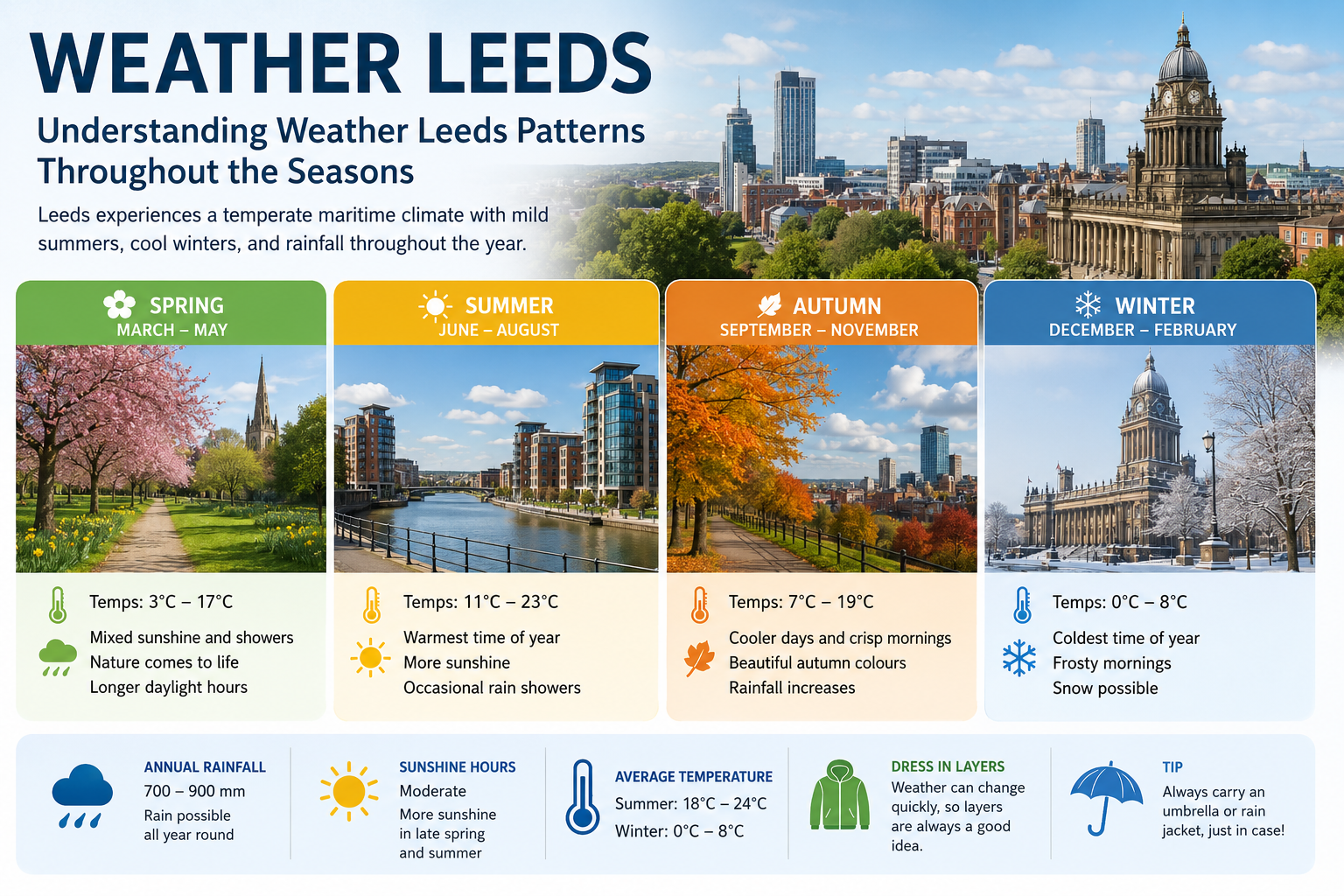
Leeds enjoys a moderate climate with relatively mild temperatures compared to many parts of Europe. The city rarely experiences extreme heat or severe cold, making it comfortable for year-round living.
Key weather characteristics include:
- Mild summers
- Cool winters
- Regular rainfall throughout the year
- Occasional snowfall in winter
- Variable cloud cover
- Moderate sunshine hours
Because Leeds sits inland and close to the Pennines, weather conditions can change quickly. Residents often experience sunshine, clouds, and rain within the same day.
Climate Characteristics of Leeds
The climate in Leeds falls under the temperate oceanic climate classification.
Key Climate Facts
| Climate Factor | Typical Range |
|---|---|
| Summer Temperature | 18°C–24°C |
| Winter Temperature | 0°C–8°C |
| Annual Rainfall | 700–900 mm |
| Snowfall | Occasional |
| Sunshine Hours | Moderate |
| Humidity | Moderate to High |
The city’s weather is influenced by Atlantic weather systems that frequently move across the UK.
Spring Weather in Leeds
What Is Spring Like in Leeds?
Spring typically runs from March to May and marks the transition from winter to warmer weather.
During this period:
- Temperatures gradually increase
- Days become longer
- Flowers and greenery begin to bloom
- Rain showers remain common
March
March can still feel wintery.
Typical conditions:
- Temperatures between 3°C and 10°C
- Occasional frost
- Mix of sunshine and rain
April
April is known for unpredictable weather.
You may experience:
- Sunny mornings
- Afternoon showers
- Mild temperatures
Average temperatures range between 5°C and 13°C.
May
May often brings more settled conditions.
Typical weather includes:
- Temperatures of 8°C to 17°C
- Longer daylight hours
- More outdoor-friendly conditions
Spring Activities in Leeds
Spring is ideal for:
- Visiting parks
- Walking trails
- Exploring city attractions
- Outdoor photography
Popular green spaces become especially attractive during this season.
Summer Weather in Leeds
How Warm Does Leeds Get in Summer?
Summer spans June to August and is generally the warmest period of the year.
Unlike southern parts of England, Leeds usually avoids prolonged heatwaves.
June
June introduces warmer temperatures.
Average conditions:
- 11°C to 20°C
- Increased sunshine
- Comfortable evenings
July
July is often the warmest month.
Typical temperatures:
- 13°C to 23°C
- Occasional days above 25°C
- Longer periods of sunshine
August
August remains pleasant but can be wetter than July.
Expect:
- Temperatures around 12°C to 22°C
- Intermittent rain showers
- Comfortable outdoor conditions
Summer Weather Benefits
Summer weather Leeds offers opportunities for:
- Festivals
- Outdoor dining
- Sporting events
- Family activities
- Day trips around Yorkshire
Although warm, carrying a light waterproof jacket remains advisable.
Autumn Weather in Leeds
What Happens During Autumn?
Autumn runs from September through November and brings cooler temperatures and changing landscapes.
The city becomes known for colourful foliage and crisp mornings.
September
September often feels like an extension of summer.
Typical weather:
- 10°C to 19°C
- Moderate rainfall
- Pleasant afternoons
October
October sees more noticeable seasonal changes.
Conditions include:
- Cooler mornings
- Increased rainfall
- Shorter days
Temperatures generally range from 7°C to 15°C.
November
November often signals the arrival of winter conditions.
Expect:
- 3°C to 10°C temperatures
- Frequent cloud cover
- Stronger winds
Why Autumn Is Popular
Many residents enjoy autumn because:
- Tourist crowds decrease
- Scenic landscapes emerge
- Temperatures remain manageable
- Seasonal events take place
Winter Weather in Leeds
How Cold Does Leeds Get?
Winter lasts from December to February.
While Leeds experiences cold weather, temperatures usually remain above extreme freezing levels.
December
December brings festive seasonal conditions.
Typical weather includes:
- 2°C to 8°C
- Frosty mornings
- Increased cloud cover
January
January is usually the coldest month.
Common conditions:
- 0°C to 7°C
- Frost
- Occasional snow
February
February often remains cold but hints at spring.
Temperatures generally range from:
- 1°C to 8°C
Does Leeds Get Snow?
Snowfall does occur in Leeds, although significant accumulations are not guaranteed every year.
Factors affecting snowfall include:
- Altitude
- Weather systems
- Air temperatures
Higher surrounding areas often receive more snow than the city centre.
Average Monthly Weather Leeds Overview
| Month | Avg High | Avg Low |
| January | 7°C | 1°C |
| February | 8°C | 1°C |
| March | 10°C | 3°C |
| April | 13°C | 5°C |
| May | 17°C | 8°C |
| June | 20°C | 11°C |
| July | 23°C | 13°C |
| August | 22°C | 12°C |
| September | 19°C | 10°C |
| October | 15°C | 7°C |
| November | 10°C | 4°C |
| December | 8°C | 2°C |
These averages provide a helpful overview for planning purposes.
Rainfall Patterns Throughout the Year
Is Leeds a Rainy City?
Leeds receives moderate rainfall throughout the year.
Unlike some regions where rainfall is highly seasonal, precipitation in Leeds is relatively evenly distributed.
Wettest Periods
Rainfall often increases during:
- October
- November
- December
Drier Periods
Relatively drier months include:
- April
- May
- June
However, rain remains possible at any time of year.
Practical Rainfall Tips
Always consider carrying:
- A compact umbrella
- Waterproof footwear
- A light rain jacket
These items can make sudden showers much less disruptive.
How Leeds Weather Compares to Other UK Cities
Leeds vs London
| Factor | Leeds | London |
| Summer Heat | Cooler | Warmer |
| Rainfall | Slightly Higher | Slightly Lower |
| Winter Temperatures | Cooler | Milder |
Leeds vs Manchester
Both cities share many similarities.
However:
- Leeds often experiences slightly less rainfall.
- Manchester can be cloudier due to its proximity to western weather systems.
Leeds vs Edinburgh
Compared to Edinburgh:
- Leeds is generally warmer.
- Winters are slightly milder.
- Snow is less frequent.
Tips for Preparing for Weather Leeds Conditions
Dress in Layers
Leeds weather can change quickly.
Layered clothing helps maintain comfort throughout the day.
Recommended Clothing
Spring:
- Waterproof jacket
- Light jumper
Summer:
- T-shirts
- Sunglasses
- Light raincoat
Autumn:
- Coat
- Waterproof footwear
Winter:
- Warm coat
- Gloves
- Scarf
Check Forecasts Regularly
Weather forecasts provide valuable information for:
- Travel planning
- Outdoor events
- Daily commuting
Conditions can change rapidly, especially during transitional seasons.
Best Time to Visit Leeds
When Should You Visit?
The ideal time depends on personal preferences.
For Warm Weather
Choose:
- June
- July
- August
For Sightseeing
Consider:
- May
- June
- September
For Seasonal Scenery
Visit during:
- October for autumn colours
- December for festive atmosphere
Each season offers its own unique appeal.
Why Understanding Weather Leeds Matters
Knowing local weather patterns helps:
- Plan travel efficiently
- Prepare appropriate clothing
- Schedule outdoor activities
- Improve daily commuting
- Enhance overall comfort
For residents, understanding seasonal trends can also help with home maintenance, gardening, and energy planning.
Conclusion
Understanding weather Leeds patterns throughout the seasons provides valuable insight into life in one of Yorkshire’s most dynamic cities. From the blooming landscapes of spring and pleasant summer temperatures to colourful autumn scenery and crisp winter mornings, Leeds offers a diverse range of weather experiences throughout the year.
Although rainfall can occur in any season, the city’s climate remains relatively moderate and predictable compared with many other regions. By recognising seasonal trends, dressing appropriately, and staying informed through reliable forecasts, residents and visitors can enjoy everything Leeds has to offer regardless of the weather.
Whether you are planning a short visit, relocating to the city, or simply exploring local climate conditions, a solid understanding of weather Leeds helps you make informed decisions all year round.
About the Author