
What Does Azizam Mean?
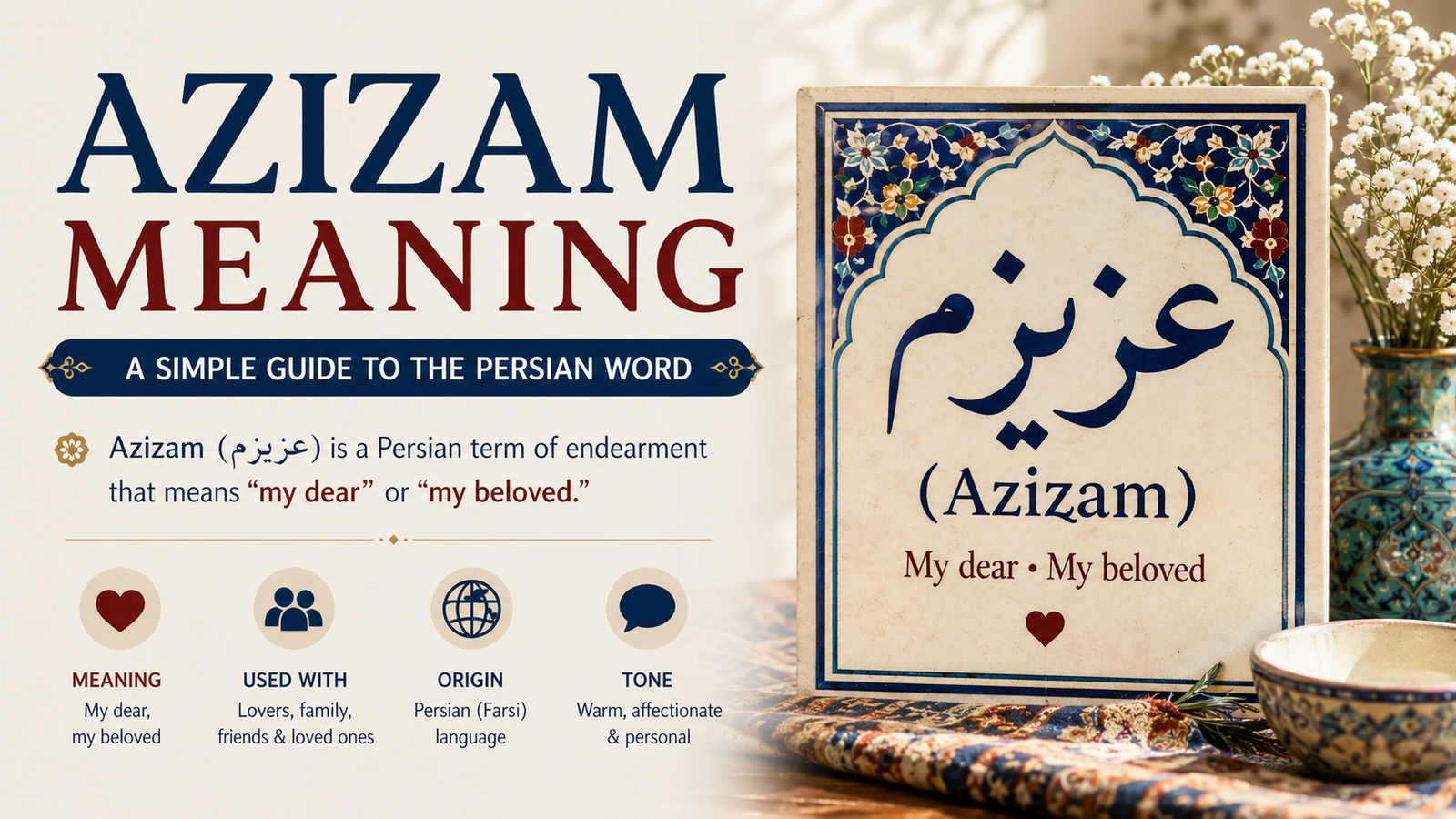
The simplest azizam meaning in English is “my dear.” Depending on context, it can also mean “my beloved,” “darling,” “sweetheart,” “my precious one,” or “my loved one.”
In Persian, the word is written as عزیزم. It comes from aziz, meaning “dear”, “beloved”, “precious”, or “valuable”, combined with the Persian possessive suffix -am, meaning “my”. So, the literal meaning of azizam is “my dear” or “my beloved.”
However, the emotional meaning is more important than the literal translation. When someone says azizam, they are usually expressing warmth, kindness, affection, or closeness.
In English, the closest translations include:
- My dear
- Darling
- Sweetheart
- My beloved
- My precious
- Dear one
- Love, depending on context
For example, a parent may say azizam to a child, meaning “my dear”. A partner may say it romantically, meaning “darling” or “my love”. A friend may use it casually to show warmth.
The Origin of the Word Azizam
The word azizam comes from Persian, also called Farsi. Persian is an Indo-Iranian language spoken mainly in Iran, Afghanistan, Tajikistan, and by Persian-speaking communities around the world.
The base word is aziz. In Persian, aziz means dear, beloved, precious, valuable, or respected. The ending -am means “my”. When the two parts are combined, aziz + am becomes azizam, meaning “my dear” or “my beloved.”
Word Breakdown
| Persian Word | Transliteration | Meaning |
|---|---|---|
| عزیز | aziz | dear, beloved, precious |
| ـم / ام | -am | my |
| عزیزم | azizam | my dear, my beloved |
This structure is common in Persian. A word can become more personal and affectionate when the possessive ending is added.
For example:
- aziz = dear
- azizam = my dear
- joon = life/soul, used affectionately
- joonam = my life/my dear
This is one reason Persian sounds so warm and expressive to many learners. Small word endings can carry strong emotional meaning.
How to Pronounce Azizam
The word azizam is usually pronounced:
ah-zee-zam
A simple pronunciation guide is:
- A as in “father”
- zi like “zee”
- zam like “zum”, but softer
So, it sounds close to:
ah-zee-zam
The stress is usually natural and gentle, not too sharp. Avoid saying it like “ay-zee-zam” in a very English way. A softer “ah” sound is closer to the Persian pronunciation.
Pronunciation Tip
Say it slowly first:
A-zi-zam
Then make it smoother:
Azizam
The word should feel warm, not formal. It is not usually said in a stiff or serious tone unless the situation is emotional.
Is Azizam Farsi or Arabic?
Azizam is commonly used in Persian/Farsi, but the root aziz has Arabic roots and is also used in several languages influenced by Arabic and Persian. In Persian usage, azizam is understood as a Farsi term of endearment meaning “my dear” or “my beloved.”
This can be confusing because many languages share similar words due to history, religion, trade, poetry, and cultural exchange. You may hear related forms in Arabic, Urdu, Turkish, Persian, and other languages.
However, when people search for azizam meaning, they are usually asking about the Persian/Farsi expression عزیزم.
Simple Answer
Azizam is a Persian/Farsi word in common usage, meaning “my dear” or “my beloved.”
How Azizam Is Used in Persian Culture
In Persian culture, affectionate words are used more freely than in some English-speaking cultures. Azizam can sound romantic, but it does not always have to be romantic.
Persian speakers may use azizam with:
- A husband, wife, boyfriend, or girlfriend
- Children
- Parents
- Close friends
- Siblings
- Relatives
- Guests
- People they want to address kindly
This is one of the most important things to understand. In English, words like “darling” or “sweetheart” can sometimes sound romantic or too personal. In Persian, azizam can be much broader. It can be romantic, friendly, parental, or simply affectionate.
A Persian mother may call her child azizam. A friend may say it to another friend. A partner may use it in a romantic message. The meaning depends on tone, relationship, and context.
Language learning site Chai and Conversation also describes azizam as one of the most common Persian terms of endearment, used with lovers, friends, family members, and even people who are not extremely close.
Azizam vs Aziz: What Is the Difference?
The difference between aziz and azizam is simple but important.
| Word | Meaning | Use |
| Aziz | Dear, beloved, precious | General word or adjective |
| Azizam | My dear, my beloved | Personal term of endearment |
Aziz can be used to describe someone as dear, respected, beloved, or precious. It can also be used in names and formal expressions.
Azizam is more personal because of the -am ending, which means “my”. It shows a closer connection.
Example
- To dust-e aziz hastī.
You are a dear friend. - Azizam, hālet chetore?
My dear, how are you?
In the first example, aziz describes someone as dear. In the second example, azizam directly addresses someone affectionately.
Azizam vs Joonam, Janam and Habibi
People often compare azizam with other affectionate words. Here is a helpful comparison.
| Word | Language/Culture | Basic Meaning | Typical Use |
| Azizam | Persian/Farsi | My dear, my beloved | Romantic, family, friends |
| Aziz | Persian/Arabic-influenced usage | Dear, precious | General or respectful |
| Joonam | Persian/Farsi | My life, my soul, my dear | Very affectionate |
| Janam | Persian/Urdu-influenced usage | My life, my beloved | Romantic or poetic |
| Habibi/Habibti | Arabic | My beloved, my love | Romantic, friendly, affectionate |
Azizam vs Joonam
Joonam can feel very affectionate and intimate. It comes from joon, meaning life or soul in Persian usage. It can be translated as “my life”, “my soul”, or simply “my dear”.
Azizam is often a little more general and flexible. It can be used warmly without always sounding deeply romantic.
Azizam vs Janam
Janam also means something close to “my life” or “my beloved”. It may sound poetic or romantic in many contexts.
Azizam is more everyday and common in Persian speech.
Azizam vs Habibi
Habibi is Arabic and means “my beloved” or “my love”. It is widely recognised because of Arabic music, social media, and Middle Eastern culture.
Azizam is Persian/Farsi and carries a similar affectionate feeling, but it belongs to Persian language and culture.
Is Azizam Romantic?
Yes, azizam can be romantic, but it is not only romantic.
If your partner calls you azizam, they probably mean something like:
- My love
- Darling
- My dear
- Sweetheart
- My beloved
In romantic texts, azizam can feel warm, soft, and personal. It is often used in affectionate messages, love notes, and emotional conversations.
For example:
Dooset dāram, azizam.
I love you, my dear.
But if a parent, friend, or relative says it, the meaning may be caring rather than romantic.
That is why context matters. The word itself is affectionate, but the relationship decides whether it is romantic.
Can You Say Azizam to a Friend?
Yes, you can say azizam to a friend, especially if the relationship is warm and familiar. In Persian-speaking culture, friends may use affectionate language more naturally than English speakers might expect.
A friend could say:
Azizam, che khabar?
My dear, what’s new?
This does not necessarily mean romance. It can simply show friendliness and warmth.
However, if you are not Persian or not familiar with the person’s cultural background, it is wise to be careful. Some people may enjoy affectionate words, while others may find them too personal.
Practical Rule
Use azizam with:
- Close friends
- Romantic partners
- Family members
- People who already use affectionate words with you
Avoid using it with:
- A new colleague
- A formal business contact
- Someone you do not know well
- Anyone who may misunderstand the tone
Common Examples of Azizam in Sentences
Here are practical examples to help you understand how azizam works in real life.
1. Romantic Use
Azizam, dooset dāram.
My dear, I love you.
This is a romantic and affectionate sentence. A partner might use it in a message or private conversation.
2. Friendly Use
Salām azizam, hālet chetore?
Hello my dear, how are you?
This can be said between friends, especially if they are close.
3. Family Use
Azizam, ghazāt ro bokhor.
My dear, eat your food.
A parent might say this to a child.
4. Comforting Someone
Gerye nakon, azizam.
Don’t cry, my dear.
This shows care and emotional support.
5. Thanking Someone
Merci azizam.
Thank you, my dear.
This is casual and affectionate. It may be used among friends, family, or loved ones.
When Should You Avoid Using Azizam?
Although azizam is a beautiful word, it is not suitable for every situation.
Avoid using azizam when the setting is highly formal or professional. For example, it may sound inappropriate in a business email, job interview, academic meeting, or first conversation with a stranger.
You should also avoid using it if you are unsure about the other person’s comfort level. In English-speaking contexts, affectionate terms can sometimes be misunderstood.
Situations Where Azizam May Not Fit
- Formal workplace communication
- Professional emails
- Legal or official conversations
- Speaking to a stranger
- Addressing someone much senior to you without familiarity
- Talking to someone who prefers formal language
Better Formal Alternatives
If you want to be polite but not affectionate, use:
- Hello
- Dear
- Hi
- Good morning
- Thank you
- I appreciate it
In a formal English message, “Dear” is usually safer than azizam.
Why Has Azizam Become Popular Online?
The word azizam has become more visible online because of Persian culture, music, global language learning, social media, and pop culture. Some English-speaking audiences also discovered the word through Ed Sheeran’s 2025 song “Azizam”, which uses the Persian term as its title. The Guardian described the title as meaning “my dear one” or “my dear/my love” in Farsi, while also discussing the song’s Persian cultural influence.
This kind of exposure makes people curious about the word’s meaning. They may hear it in a song, see it in a caption, receive it in a message, or notice it in a Persian drama.
Searches for azizam meaning in English, what does azizam mean, and azizam meaning in Farsi often come from people who want a simple explanation, not a complex grammar lesson.
That is why the best answer is both linguistic and cultural:
Azizam means “my dear” or “my beloved”, but it also carries warmth, affection, and emotional closeness.
Is Azizam Suitable for Text Messages?
Yes, azizam is commonly suitable for informal text messages, especially with someone you know well.
For example:
Good night, azizam.
This sounds affectionate and sweet.
Thank you, azizam.
This sounds warm and grateful.
I miss you, azizam.
This sounds romantic or emotionally close.
In English texts, you can keep azizam untranslated if the other person understands it or enjoys Persian words. If not, you may add the meaning the first time you use it.
Example:
Azizam means “my dear” — and that is exactly what you are to me.
This keeps the message personal and clear.
How to Use Azizam Naturally as a Non-Persian Speaker
If you are learning Persian or using azizam because someone special uses it, the key is to sound respectful and natural.
Here are some simple tips:
- Understand the meaning first
Do not use it only because it sounds nice. Know that it means “my dear” or “my beloved”. - Use it with the right person
It works best with close friends, family, or romantic partners. - Keep the tone warm
Azizam should sound affectionate, not forced. - Do not overuse it
Repeating it too often can make it sound unnatural. - Respect cultural context
If someone Persian teaches you how they use it, follow their guidance.
Quick Featured Snippet Answer
Azizam meaning: Azizam is a Persian/Farsi term of endearment meaning “my dear,” “my beloved,” “darling,” or “my precious one.” It comes from aziz, meaning dear or beloved, plus -am, meaning my. It can be used romantically, but Persian speakers also use it with family, friends, and loved ones.
Related Keywords and Semantic Terms
For SEO coverage, this article naturally connects with terms such as:
- azizam meaning in English
- azizam meaning in Farsi
- what does azizam mean
- azizam pronunciation
- Persian terms of endearment
- Farsi love words
- Persian love words
- aziz meaning
- azizam translation
- my dear in Persian
- my beloved in Farsi
These related terms help match the full informational intent behind the keyword without keyword stuffing.
Conclusion
The azizam meaning is simple on the surface but rich in emotion. In English, azizam means “my dear,” “my beloved,” “darling,” or “my precious one.” It comes from Persian/Farsi, combining aziz, meaning dear or beloved, with -am, meaning my.
What makes the word special is how flexible it is. It can be romantic, but it can also be friendly, parental, comforting, or simply warm. Persian speakers may use azizam with partners, children, relatives, close friends, and sometimes even in kind everyday conversation.
If you hear someone call you azizam, they are usually expressing affection, care, or emotional closeness. The exact feeling depends on the relationship and tone, but the heart of the word remains the same: warmth.
For English speakers, the safest translation is “my dear.” But if the context is romantic, “my beloved” or “darling” may be more accurate.
About the Author