Understanding Weather Nottingham
Nottingham enjoys a typical English climate with moderate seasonal variations. Unlike some regions that experience extreme temperatures, Nottingham generally remains comfortable throughout the year.
Key climate characteristics include:
- Mild summers
- Cool winters
- Moderate rainfall year-round
- Occasional snowfall in winter
- Comfortable spring and autumn temperatures
The city’s inland location helps reduce the impact of coastal weather systems, creating relatively stable conditions compared to some coastal areas of the United Kingdom.
Nottingham Climate Overview
The climate in Nottingham is classified as temperate maritime.
Average Weather Conditions
| Season | Average Temperature | Typical Conditions |
|---|---|---|
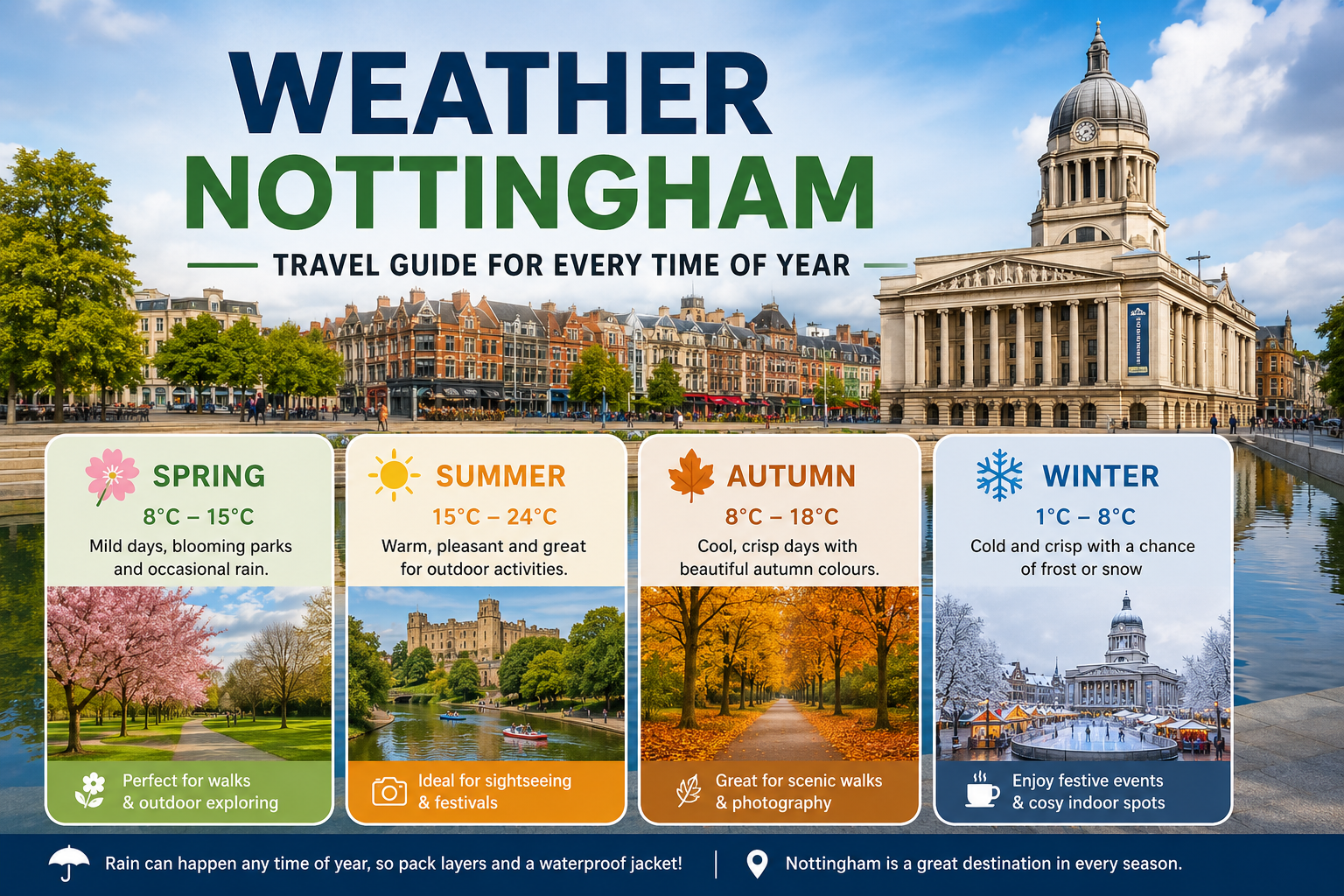
| Spring | 8°C to 15°C | Mild and fresh |
| Summer | 15°C to 24°C | Warm and pleasant |
| Autumn | 8°C to 18°C | Cool and colourful |
| Winter | 1°C to 8°C | Cold and damp |
Rainfall occurs throughout the year, although it is generally moderate compared to many other UK regions.
Weather Nottingham in Spring
What Is Spring Like in Nottingham?
Spring typically runs from March through May and is one of the most pleasant times to visit Nottingham.
As temperatures gradually rise, parks and gardens begin to bloom, creating beautiful scenery across the city.
March
March often feels cool, with temperatures ranging from 4°C to 11°C.
Visitors should expect:
- Chilly mornings
- Occasional rain showers
- Increasing daylight hours
April
April weather can be unpredictable.
You may experience:
- Sunshine
- Light rain
- Mild temperatures
This variability is often reflected in the saying, “April showers bring May flowers.”
May
May is generally warmer and sunnier.
Average temperatures range from:
- 8°C to 18°C
Outdoor attractions become particularly enjoyable during this month.
Spring Travel Tips
- Carry a light waterproof jacket
- Wear layers for changing temperatures
- Bring comfortable walking shoes
- Pack a small umbrella
Weather Nottingham in Summer
How Warm Does Nottingham Get in Summer?
Summer is considered peak tourism season in Nottingham.
The months of June, July, and August offer the warmest weather and longest daylight hours.
June
Temperatures typically range between:
- 12°C and 22°C
Conditions are ideal for:
- Sightseeing
- Outdoor dining
- Walking tours
July
July is often the warmest month.
Average temperatures:
- 14°C to 24°C
Some years may experience brief heatwaves exceeding 28°C.
August
August remains pleasantly warm and suitable for outdoor activities.
Popular summer attractions include:
- Wollaton Park
- Nottingham Castle
- Sherwood Forest
- Riverside walks
Benefits of Visiting in Summer
- Longer daylight hours
- Outdoor festivals
- Pleasant temperatures
- Ideal photography conditions
Weather Nottingham in Autumn
What Can You Expect During Autumn?
Autumn brings cooler temperatures and beautiful seasonal colours.
Many visitors consider autumn one of the most picturesque times to experience Nottingham.
September
September often feels like an extension of summer.
Temperatures range from:
- 11°C to 20°C
October
October introduces cooler weather.
Expect:
- Crisp mornings
- Colourful foliage
- Increased rainfall
November
November can feel noticeably colder.
Average temperatures:
- 4°C to 10°C
Many travellers enjoy the quieter tourist atmosphere during this period.
Autumn Travel Advice
- Pack warmer clothing
- Bring waterproof footwear
- Check weather forecasts regularly
- Plan indoor alternatives for rainy days
Weather Nottingham in Winter
Is Nottingham Cold in Winter?
Winter in Nottingham is generally cold but manageable.
Temperatures rarely reach severe extremes.
December
The festive atmosphere makes December a popular time for city breaks.
Average temperatures:
- 2°C to 8°C
January
January is often the coldest month.
Typical temperatures:
- 1°C to 7°C
Frosty mornings are common.
February
February begins the transition toward spring.
Visitors may experience:
- Occasional snow
- Chilly winds
- Increasing daylight
Winter Attractions
Despite colder weather, visitors can still enjoy:
- Nottingham Winter Wonderland
- Museums
- Historic sites
- Shopping centres
- Indoor entertainment venues
Monthly Weather Nottingham Breakdown
Average Monthly Temperatures
| Month | Average High | Average Low |
| January | 7°C | 1°C |
| February | 8°C | 1°C |
| March | 11°C | 3°C |
| April | 14°C | 5°C |
| May | 18°C | 8°C |
| June | 22°C | 12°C |
| July | 24°C | 14°C |
| August | 23°C | 13°C |
| September | 20°C | 11°C |
| October | 15°C | 8°C |
| November | 10°C | 4°C |
| December | 8°C | 2°C |
These averages provide a useful guide, though actual conditions may vary from year to year.
Best Time to Visit Nottingham
Which Season Is Best?
The ideal time depends on your preferences.
For Outdoor Activities
Best months:
- May
- June
- July
- August
For Budget Travellers
Consider:
- November
- January
- February
Accommodation prices are often lower.
For Photography
Recommended seasons:
- Spring for flowers
- Autumn for colourful foliage
For Festivals and Events
Summer generally offers:
- More outdoor events
- Cultural festivals
- Live entertainment
What to Pack for Nottingham Weather
Essential Packing List
Spring
- Waterproof jacket
- Light jumper
- Umbrella
- Comfortable shoes
Summer
- T-shirts
- Sunglasses
- Light jacket
- Walking shoes
Autumn
- Waterproof coat
- Layers
- Boots
- Warm jumper
Winter
- Heavy coat
- Gloves
- Scarf
- Waterproof footwear
Packing layers is always recommended because weather Nottingham can change quickly during a single day.
Travel Tips for Different Weather Conditions
Rainy Days
Rain is possible in every season.
Good rainy-day activities include:
- Visiting museums
- Exploring galleries
- Shopping centres
- Historic buildings
Sunny Days
Take advantage of pleasant weather by visiting:
- Wollaton Hall
- Sherwood Forest
- Highfields Park
- Nottingham Castle grounds
Cold Weather
Winter visitors should:
- Dress in layers
- Check transport updates
- Carry gloves and a hat
- Allow extra travel time
How Does Weather Nottingham Compare to Other UK Cities?
| City | Rainfall | Summer Temperature | Winter Temperature |
| Nottingham | Moderate | Warm | Cool |
| London | Slightly Lower | Similar | Similar |
| Manchester | Higher | Similar | Slightly Cooler |
| Birmingham | Similar | Similar | Similar |
| Leeds | Higher | Slightly Cooler | Cooler |
Nottingham often experiences a balanced climate that appeals to both residents and visitors.
Why Understanding Weather Nottingham Matters
Knowing local weather patterns helps travellers:
- Pack appropriately.
- Plan outdoor activities.
- Choose the best travel dates.
- Budget for seasonal accommodation.
- Enjoy attractions comfortably.
Checking forecasts before arrival is always recommended for the most accurate planning.
Conclusion
Weather Nottingham offers something unique in every season. Spring brings blooming parks and mild temperatures, summer provides warm days ideal for sightseeing, autumn showcases stunning colours across the countryside, and winter creates a festive atmosphere with cosy indoor attractions and seasonal events.
One of Nottingham’s strengths is its balanced climate. Temperatures remain relatively comfortable throughout the year, making the city an attractive destination regardless of when you visit. While rainfall can occur in any season, proper preparation and flexible planning ensure an enjoyable experience.
Whether you’re visiting for history, culture, business, outdoor adventures, or a weekend getaway, understanding weather Nottingham will help you make informed travel decisions and get the most from your stay.
About the Author