What Is Greggs?
Greggs is a UK-based bakery and food-on-the-go retailer known for products such as:
- Sausage rolls
- Vegan sausage rolls
- Sandwiches
- Baguettes
- Coffee
- Breakfast items
- Sweet treats
Founded in Newcastle upon Tyne, the company has grown into a nationwide chain with thousands of shops across the United Kingdom.
Today, Greggs serves millions of customers each week and continues expanding into new locations, including:
- Transport hubs
- Retail parks
- Petrol stations
- Drive-thru outlets
- Industrial estates
Its ability to adapt to changing consumer preferences has helped strengthen both the business and investor confidence.
Understanding the Greggs Share Price
The Greggs share price represents the market value of one share in the company. It fluctuates daily based on supply and demand in the stock market.
When investors believe Greggs will grow profits and revenue in the future, demand for shares often increases, pushing the share price higher.
Conversely, concerns about economic conditions, slowing sales, rising costs, or weaker earnings can lead to declines in the Greggs share price.
Why Do Investors Monitor Share Prices?
Investors track share prices to:
- Assess company performance
- Measure investment returns
- Identify buying opportunities
- Compare stocks within the retail sector
- Evaluate long-term growth potential
The share price acts as a reflection of market expectations about the company’s future prospects.
Factors That Influence the Greggs Share Price
Several key factors can affect the Greggs share price.
Revenue Growth
One of the strongest drivers is revenue growth.
When Greggs reports increasing sales, investors often view this as a sign of business strength.
Strong sales growth may result from:
- New store openings
- Increased customer traffic
- Successful product launches
- Digital ordering improvements
Consistent revenue growth typically supports a positive share price trend.
Profitability
Revenue alone is not enough.
Investors also focus on profitability metrics such as:
- Operating profit
- Net profit
- Profit margins
A company generating healthy profits is generally viewed more favourably by the market.
Consumer Spending Trends
Greggs relies heavily on everyday consumer spending.
Factors affecting customer spending include:
- Inflation
- Wage growth
- Interest rates
- Economic confidence
When consumers have more disposable income, food-to-go purchases often increase.
Expansion Strategy
Greggs continues to expand across the UK.
Investors frequently evaluate:
- Number of new stores
- Performance of new locations
- Growth in drive-thru outlets
- Digital sales initiatives
Successful expansion can contribute positively to future earnings.
Market Sentiment
Share prices are influenced by investor psychology.
Even if Greggs performs well, broader market concerns can affect the stock.
Examples include:
- Economic recessions
- Political uncertainty
- Stock market volatility
- Interest rate changes
Historical Performance of Greggs Shares
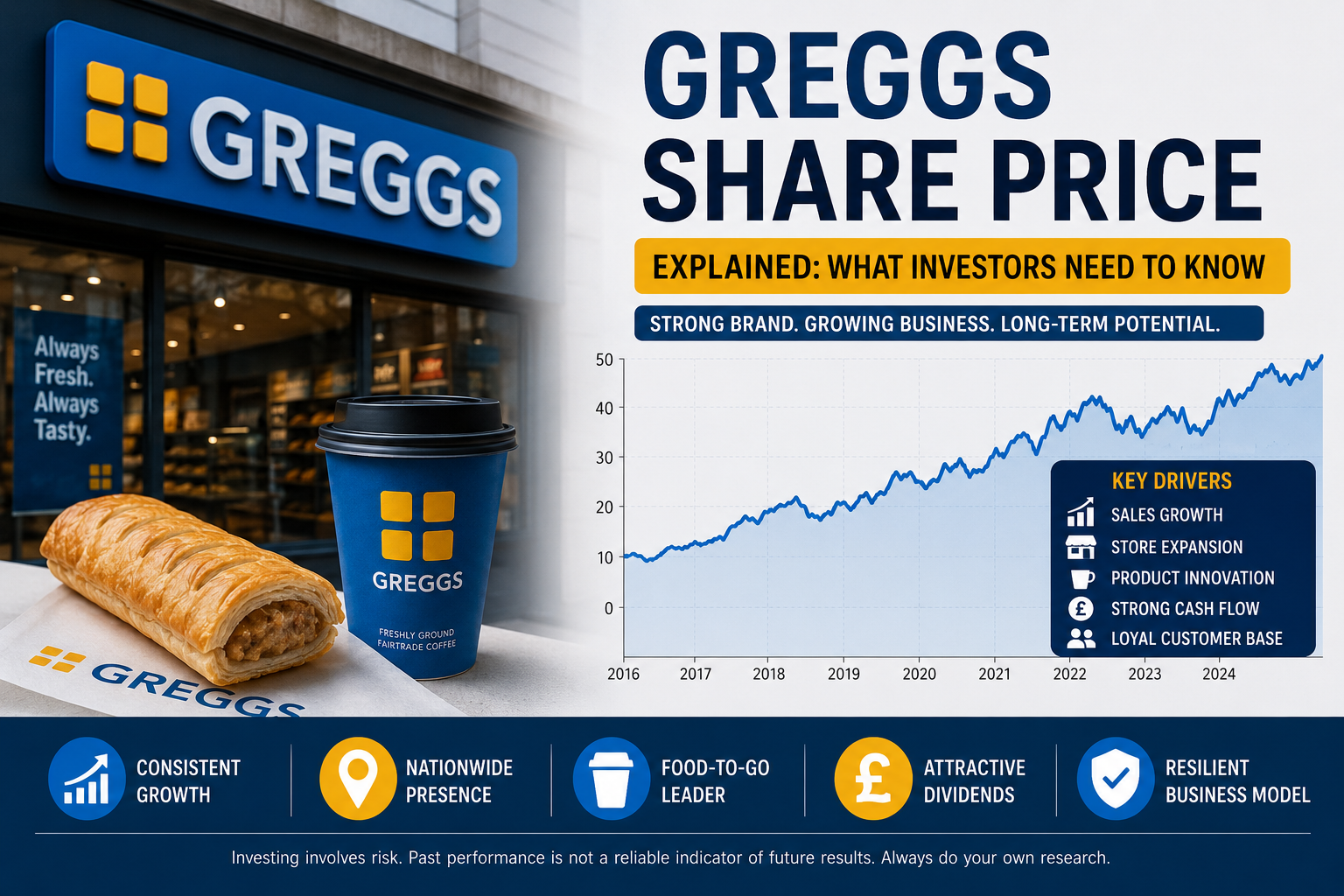
The Greggs share price has experienced notable growth over the long term, reflecting the company’s successful transformation strategy.
From Traditional Bakery to Food-On-The-Go Leader
Several years ago, Greggs was often viewed as a traditional bakery chain.
Management invested heavily in:
- Store modernisation
- Product innovation
- Digital technology
- Delivery partnerships
These initiatives helped reposition the company as a leading food-to-go retailer.
Strong Growth Periods
Periods of strong performance have often coincided with:
- Increased store openings
- Strong same-store sales growth
- Successful product launches
- Improved operating efficiency
The famous vegan sausage roll launch, for example, generated significant media attention and boosted brand visibility.
Challenges Along the Way
Like most retailers, Greggs has faced challenges, including:
- Economic downturns
- Rising ingredient costs
- Labour shortages
- Pandemic-related disruptions
Despite these challenges, the company has shown resilience and adaptability.
Greggs Business Model and Competitive Advantage
Understanding the business helps investors better assess the Greggs share price.
Affordable Pricing
Greggs appeals to value-conscious consumers.
Affordable menu prices help maintain customer demand even during challenging economic periods.
Strong Brand Recognition
Few UK food retailers enjoy the same level of brand awareness as Greggs.
The brand’s familiarity helps attract repeat customers and maintain market share.
Extensive Store Network
A large store network provides significant competitive advantages.
Benefits include:
- Greater customer convenience
- Increased brand visibility
- Improved economies of scale
Product Innovation
Greggs regularly introduces new products and seasonal offerings.
Innovation helps:
- Attract new customers
- Increase average spending
- Maintain customer engagement
Financial Metrics Investors Should Watch
When analysing the Greggs share price, investors should focus on key financial indicators.
Revenue
Revenue measures total sales generated by the business.
Increasing revenue often signals growing customer demand.
Earnings Per Share (EPS)
EPS indicates how much profit is attributable to each share.
Higher EPS can support long-term share price growth.
Dividend Yield
Greggs has historically attracted income-focused investors through dividend payments.
A stable dividend can enhance total investment returns.
Operating Margin
Operating margin measures efficiency.
Improving margins may indicate better cost management and stronger profitability.
Cash Flow
Strong cash flow enables Greggs to:
- Open new stores
- Invest in technology
- Pay dividends
- Manage economic challenges
Greggs Share Price vs Other UK Retail Stocks
Investors often compare Greggs with other UK retail businesses.
| Factor | Greggs | Traditional Retailers |
|---|---|---|
| Brand Recognition | High | Varies |
| Nationwide Presence | Strong | Varies |
| Growth Potential | Moderate to High | Varies |
| Dividend Appeal | Attractive | Depends on Company |
| Consumer Demand | Frequent Purchases | Less Frequent |
One advantage Greggs enjoys is repeat customer behaviour.
Many consumers purchase food and drinks several times per week, creating recurring revenue opportunities.
Growth Opportunities for Greggs
Future growth remains an important factor influencing the Greggs share price.
New Store Openings
Expansion remains a major growth driver.
Additional locations can increase revenue and market reach.
Drive-Thru Growth
Drive-thru outlets have become increasingly popular.
Benefits include:
- Convenience
- Faster service
- New customer segments
Digital Transformation
Digital ordering and mobile technology continue to create opportunities.
These initiatives may improve customer experience and operational efficiency.
Delivery Partnerships
Collaboration with delivery platforms expands Greggs’ reach beyond traditional store visits.
This can generate additional sales without requiring major physical expansion.
Risks That Could Affect the Greggs Share Price
No investment is without risk.
Rising Costs
Greggs faces ongoing cost pressures from:
- Ingredients
- Energy
- Labour
- Transportation
Higher costs can impact profitability.
Economic Slowdowns
Weak consumer confidence can reduce discretionary spending.
Although Greggs offers affordable products, economic challenges may still affect sales.
Increased Competition
The food-to-go market remains highly competitive.
Competitors include:
- Coffee chains
- Supermarkets
- Fast-food outlets
- Convenience stores
Market Volatility
External market factors can impact share prices regardless of company performance.
Investors should prepare for fluctuations.
Is Greggs a Good Long-Term Investment?
The answer depends on individual investment goals.
Greggs may appeal to investors seeking:
- Exposure to the UK consumer sector
- Long-term growth potential
- Dividend income
- A well-established brand
However, investors should always conduct thorough research and consider:
- Risk tolerance
- Investment timeframe
- Portfolio diversification
- Market conditions
No stock can guarantee positive returns.
A balanced investment strategy remains essential.
Tips for New Investors Considering Greggs Shares
Research Financial Reports
Review annual and interim company reports.
These provide valuable insights into:
- Revenue
- Profitability
- Growth plans
- Risks
Think Long Term
Short-term market movements can be unpredictable.
Long-term investing often allows stronger businesses time to grow.
Diversify Your Portfolio
Avoid concentrating investments in a single company.
Diversification can reduce overall risk.
Monitor Industry Trends
Stay informed about:
- Consumer behaviour
- Inflation
- Retail trends
- Economic developments
These factors can influence future performance.
Conclusion
The Greggs share price reflects more than just the popularity of Britain’s favourite bakery chain. It represents investor confidence in the company’s ability to generate revenue, maintain profitability, expand its footprint, and adapt to changing consumer habits.
Greggs has successfully evolved into a modern food-on-the-go business with strong brand recognition, a growing store network, and a loyal customer base. These strengths have helped support long-term growth and attract investor interest.
However, like any investment, Greggs shares carry risks. Economic conditions, rising costs, competition, and market volatility can all influence future performance.
For investors seeking exposure to a well-known UK consumer brand, Greggs remains a company worth monitoring. Understanding the factors that drive the Greggs share price can help investors make more informed decisions and build a stronger long-term investment strategy.
About the Author